A plant can look perfect beside your sofa and still be a poor match for the light in that corner. Before choosing a pot or a leaf shape, choose a possible location and find out what happens there during a normal day.
You do not need to turn the living room into a laboratory. A short observation record gives you something more useful to take to a nursery than “my apartment is quite bright.” Start with one location, then choose a plant whose requirements fit it.
Choose the spot at leaf height
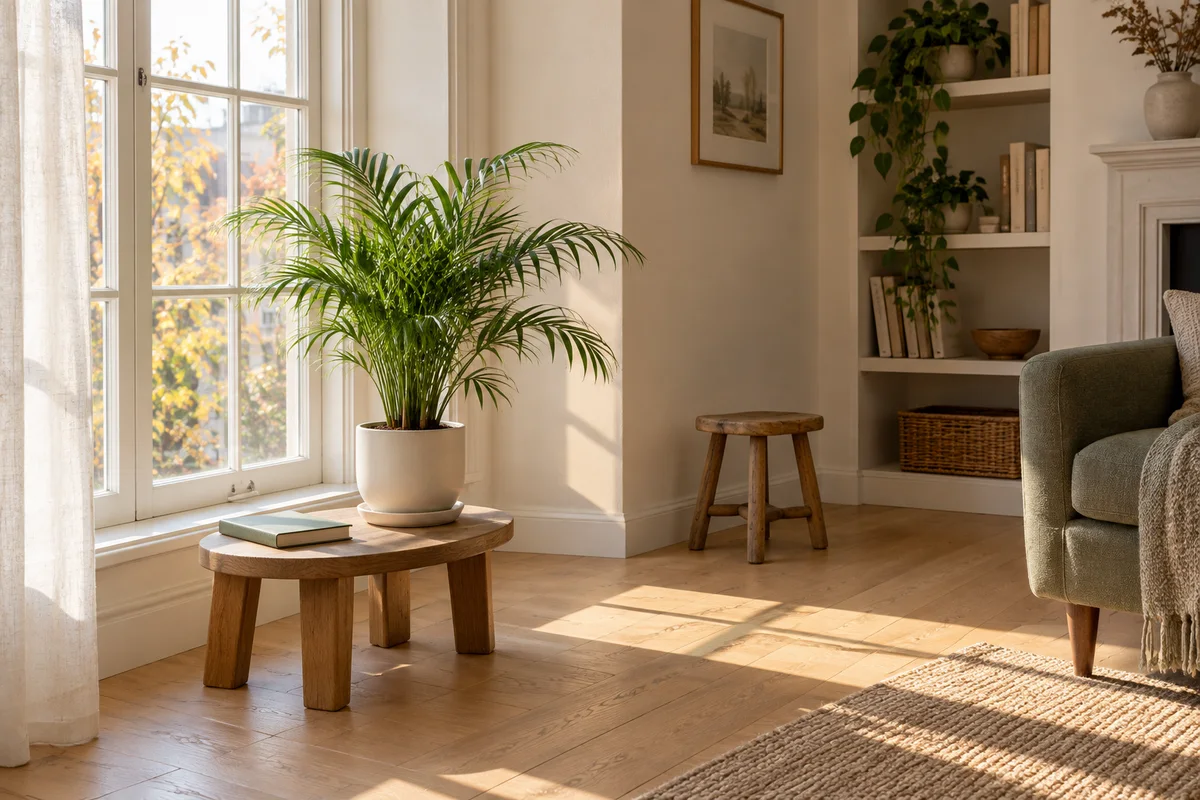
Picture where the foliage will actually sit: on a windowsill, on a side table, or on the floor. Note the approximate distance from the glass and whether the position is directly in front of the window or off to one side. Record inches or feet so you can compare places consistently.
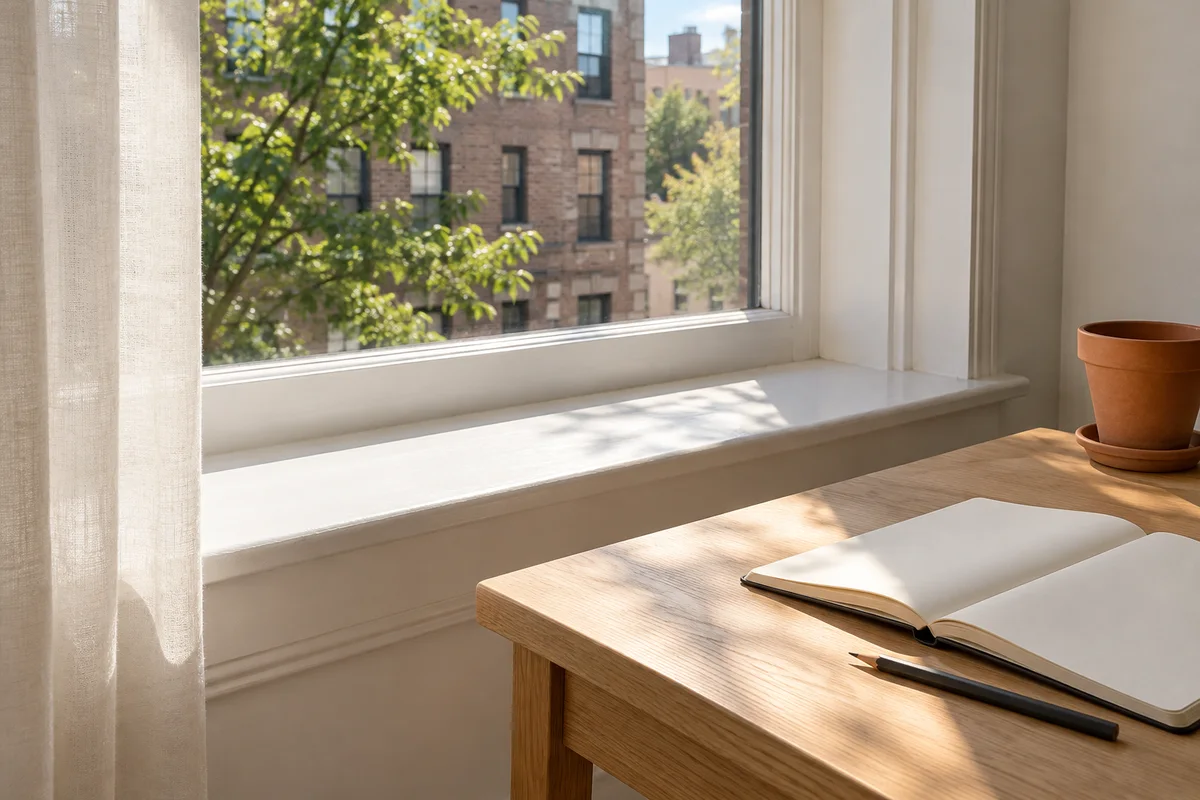
A shelf above a window and a table below it do not necessarily receive the same light. Observe the place where the leaves would be, rather than judging from the brightest part of the room. Keep the existing furniture arrangement and your usual curtain position while checking.
University of Minnesota Extension recommends checking the quality and hours of natural light before choosing a plant. That order is helpful in a small home: find the workable growing spot before buying a plant that needs a different one.
Record what the window faces—and what blocks it
Use a compass or an existing building plan to note the direction the window faces. Then look beyond the label. Is there a deep balcony above it, a neighboring wall, a large tree, or a roof overhang? Does a blind remain partly closed for privacy most of the day?
Iowa State’s houseplant guide explains that direction is only one factor. Distance from the window, the size of the opening, window coverings, and outside obstructions also change the light a plant receives. A south-facing window behind a covered porch should not be treated as equivalent to an unobstructed south-facing window.
Make a short location card: “Living room, east-facing window, table 2 feet from glass, blind half closed during work hours.” This is an example of a record, not a recommended distance for every plant. Add a photo showing the window and the proposed position so a nursery employee can understand the setting.
Separate direct sun from the rest of the daylight
At the proposed position, note when a beam of sunlight lands on the area the leaves would occupy. That is different from a place lit by daylight without the sun striking it directly. Iowa State describes bright indirect light as having enough intensity to cast a distinct shadow without direct rays hitting the foliage.
Use that description as a starting vocabulary, not a precise measurement. A shadow or a bright-looking photograph does not establish that a particular plant will get enough light. The room can also look different to your eyes as you move between darker and brighter spaces.
Watch what the curtain changes. A patch of direct sun with the curtain open may disappear when you close it for privacy. If the curtain is normally closed at that time, record the conditions you will actually maintain. A plant plan that requires an inconvenient daily routine may not suit your home.
Make a short light log
Check the same spot in the morning, around midday, and later in the afternoon. These are useful checkpoints rather than a scientific sampling schedule. If direct sun reaches the spot, add observations around when it starts and stops; widely spaced checks cannot establish an exact duration.
Repeat on several days when you can, including different weather. Use a table like this one:
| Date and time | Weather | What reaches the proposed leaf position? | Curtains and obstacles |
|---|---|---|---|
| Your observation | Clear, cloudy, or changing | Direct sun present, or daylight without a direct beam | Usual blind position; tree or building shade |
| Your observation | Record actual conditions | Note when a sun patch appears or moves away | Record anything that changed |
| Your observation | Record actual conditions | Describe the same spot again | Keep the location consistent |
The table records what you saw. It does not convert observations into a guaranteed plant category or an exact daily light total. If you miss part of the day, leave that gap visible instead of filling it with an assumption.
Use the record to narrow your choices
Take the location card and light log to the nursery, or compare them with a reliable care guide for the exact plant you are considering. Ask what its light description means in your setting. “Low light” is a growing-condition label, not a promise that a plant will live in a windowless corner.
If the choice remains uncertain, select one suitable plant rather than buying several for different decorative positions at once. Keep its identity and care information. Your first plant gives you a manageable care routine and a chance to review the location before expanding.
If the available natural light does not meet the plant’s requirements, consider another position or research an appropriate grow light. University of Maryland Extension distinguishes light intensity, duration, and quality; simply leaving an ordinary room lamp on longer does not establish that a plant’s lighting needs are met. Follow plant-specific guidance and the light manufacturer’s placement and operating instructions.
Recheck when the room or season changes
Your record describes the conditions observed on those dates. Maryland Extension identifies weather, season, tree shade, nearby buildings, and window treatments as factors affecting indoor light. Revisit the spot after changing curtains or moving furniture, and as daylight patterns change through the year.
For example, if a clear morning produces a sun patch on the floor but never on your chosen shelf, record those as two different locations. Do not move the plant onto the sunny patch without first checking whether that exposure suits it. A more attractive display is not automatically a better growing position.
Once you choose the location, make space to inspect the plant and handle watering without crowding the room. Protect the surface appropriately and follow care instructions for the plant and container. Our reversible room refresh guide can help you adjust the surrounding furniture before buying another stand.
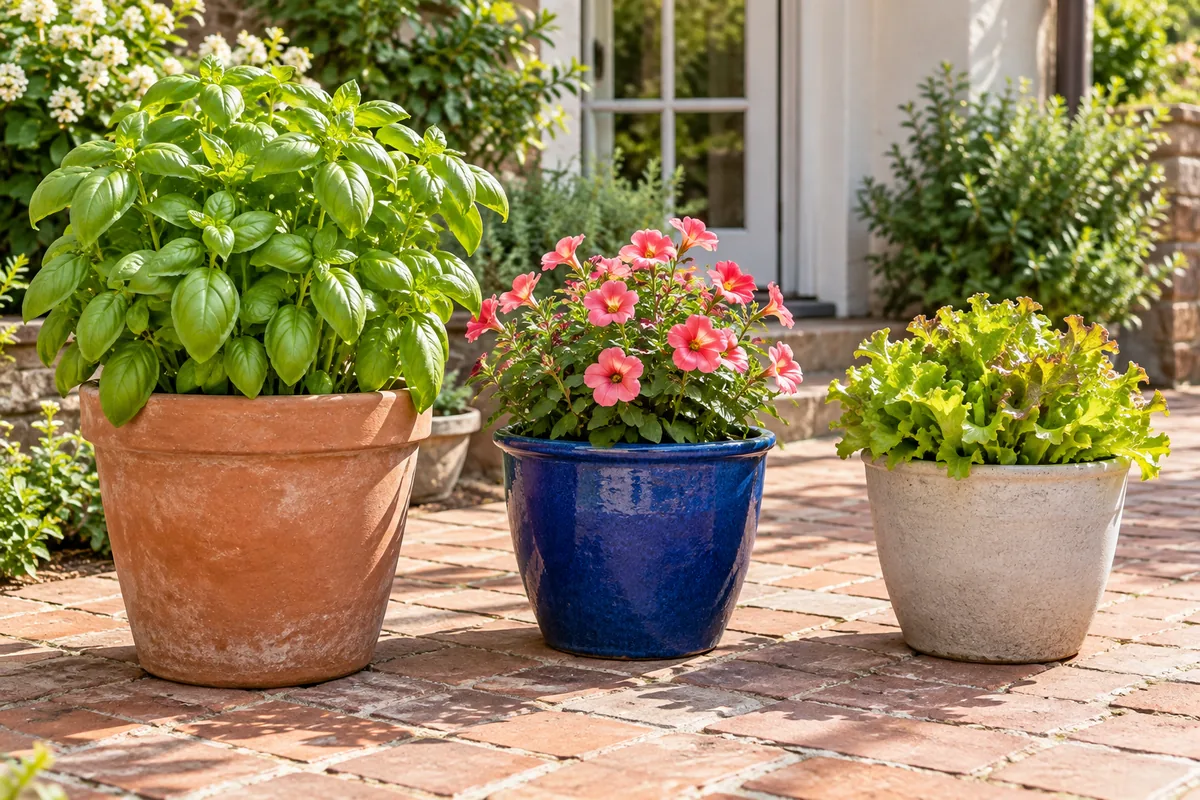
For an outdoor planting project, use our three-pot container garden guide. Outdoor sun, weather, and container conditions need their own assessment; this indoor light log does not establish whether a plant can move outside.
Sources and further reading
- University of Minnesota Extension: Lighting for Indoor Plants and Starting Seeds
Match a plant's requirements to the available light; roof overhangs and insufficient light affect indoor growing conditions.
- Iowa State University Extension: How to Care for Houseplants
Indoor light depends on distance, window size and direction, coverings, and outdoor obstructions. Explains bright indirect light and supplemental lighting.
- University of Maryland Extension: Lighting for Indoor Plants
Distinguishes light intensity and duration, identifies seasonal and weather effects, and discusses supplemental lighting. Our observation worksheet is an editorial planning aid, not a calibrated light assessment.
The notes above identify which guidance each source supports. Layouts and planning examples are editorial suggestions, not tested product claims.