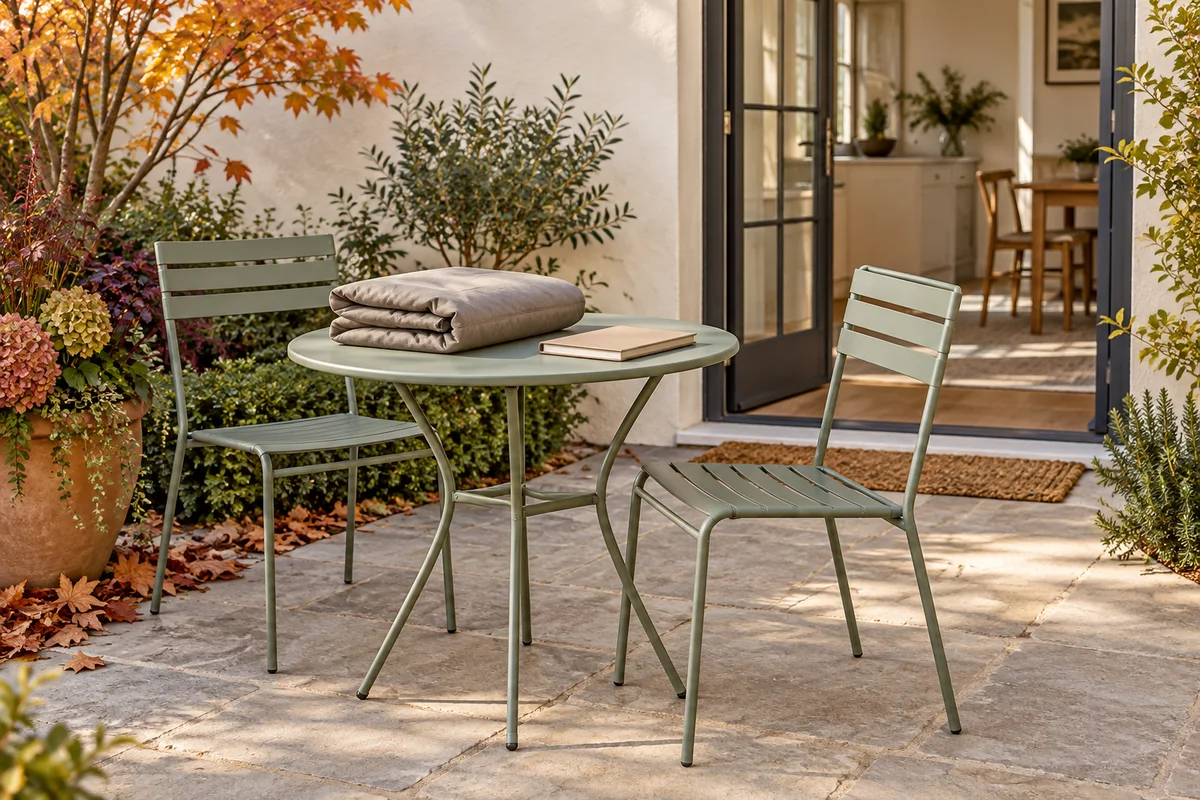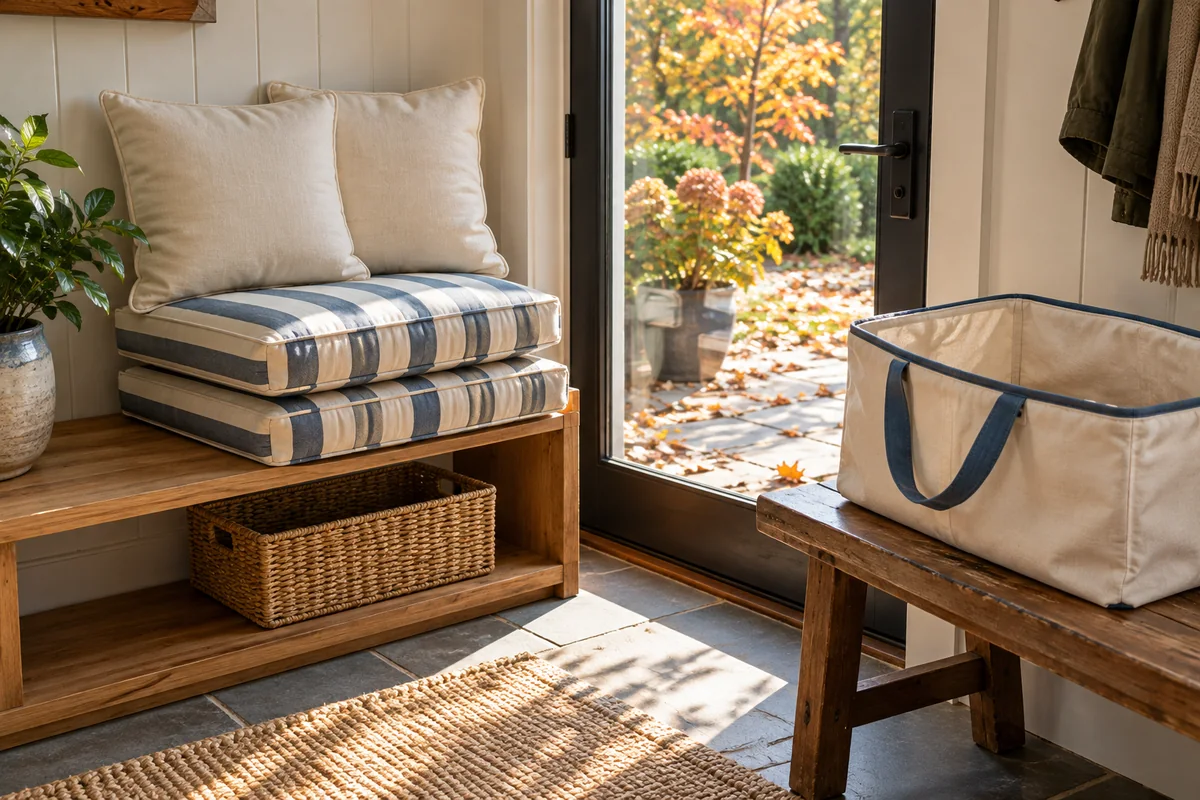
Outdoor cushions often take up more indoor room than the small chairs they belong to. Before buying a storage bag or deck box, gather the cushions you actually want to keep and decide where they will live between uses. The useful storage solution is one you can open, load, and check without reorganizing the room each time.
This is a storage-planning guide. Cleaning methods, drying requirements, and suitable storage conditions depend on the complete cushion, including its filling and seams, as well as the outer fabric.
Decide whether this is daily storage or seasonal storage
For daily use, convenience matters. If it takes several trips through the bedroom to retrieve every seat cushion, you may stop putting them away. A nearby accessible shelf or suitable storage bag could suit a small set better than a large container in an awkward place.
For seasonal storage, count everything that will remain unused: seat cushions, back cushions, throw pillows, and any separate covers. Keep a note of which pieces belong to which chair. A quick photo of the set can be more useful than finding four similar-looking cushions months later.
Use the climate and your routine to choose the timing. There is no single U.S. date when every patio should be packed away.
Read the care instructions before enclosing anything
Find the furniture or cushion label and save the current care instructions. A zipper does not automatically mean the cover should be removed or machine-washed. Sunbrella’s upholstery guidance specifically says to consult the furniture manufacturer before removing casings because construction varies.
Weatherend’s care brochure tells owners of its Sunbrella cushions and covers to clean them and let them air-dry completely before seasonal storage. Sunbrella also specifies air-drying for its upholstery fabric. Use those as product-specific examples; follow the instructions for your actual cushions rather than copying a cleaner, bleach mixture, or drying method from another fabric.
If a cushion still feels damp internally or you cannot tell whether it is ready, keep it out of enclosed storage and ask the manufacturer how to assess and dry that construction. A bag should not be used as a drying chamber.
Measure the stack you intend to store
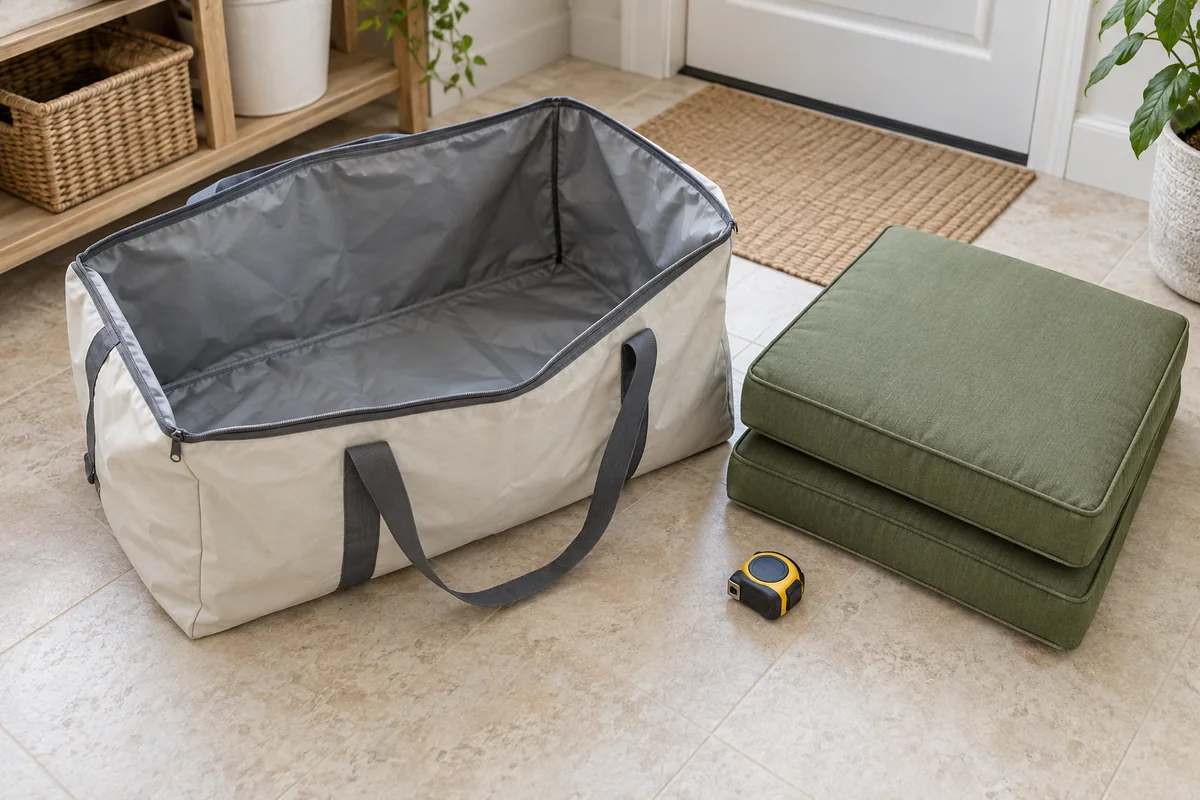
Arrange the dry cushions as you would store them, without forcing them flat. Record the largest width, largest depth, and overall stack height. Include straps, piping, and shaped backs that affect the outline. Then check the storage product’s usable inside dimensions and opening.
Here is a hypothetical example: four square cushions measure 20 × 20 inches each and are about 4 inches thick. A loose stack is approximately 20 × 20 × 16 inches. Its rectangular envelope is 6,400 cubic inches, or about 3.7 cubic feet. These are example dimensions, not standard cushion sizes.
That volume does not prove the stack will fit a container advertised with a larger capacity. The opening might be too small, the corners rounded, or a hinge might take up part of the interior. Compare the shape and each dimension before relying on a gallon or cubic-foot rating.
Choose a location before a container
| Option | Useful planning question | Check before buying |
|---|---|---|
| Existing indoor shelf | Can I take the set out without moving other belongings? | Shelf dimensions, loading instructions, and condition of the location |
| Fabric storage bag | Can I carry or slide the loaded bag along the route? | Full opening size, handles, and the bag’s intended storage conditions |
| Under-bed space | Can the stack pass under the frame and come back out? | Actual clearance, center supports, and the storage product’s dimensions |
| Outdoor deck box | Can I open the lid and remove cushions in the planned position? | Usable interior, weather/storage instructions, lid safety, and permitted placement |
Do not assume a deck box is watertight, ventilated, or suitable as seating unless its instructions say so. On a balcony, confirm permitted loads and placement with the building before adding a storage unit. Keep doors, drainage, and required access clear. A lockable lid is not a substitute for following a product’s child-safety instructions.
Consider whether one large container makes the job harder
A single bag can be tidy but awkward to retrieve from the back of a closet. Two smaller groups may suit your routine better: one for seat cushions and another for back cushions, for example. Compare that extra handling with the benefit of easier access.
Before buying another box, also ask whether every decorative pillow needs to stay outside. A small seating area with fewer separate cushions may fit your habits better than a full set that requires a large storage footprint.
Leave yourself a restart note
Keep the care instructions with a short record of where the set is stored, when it was put away, and anything needing attention before reuse. Check the storage location and cushions periodically rather than assuming a closed container removes the need for inspection. If you notice dampness, a leak, or an unusual odor, investigate before closing everything up again.
You can explore the position of an illustrative storage chest in the Patio & Balcony Layout Planner. Its fixed example dimensions cannot confirm that your cushions fit, and it does not show an open lid. Use the exact product measurements for that decision. Our small patio furniture layout guide helps you preserve a usable route around it; our closet-free entryway guide offers another way to think about everyday access.
For the rest of the seating area, make a small patio winter storage plan that assigns a destination to each table, chair, and removable part. Check the furniture instructions separately from the cushion care label.
Sources and further reading
- Sunbrella: How to Clean Sunbrella Upholstery Fabric
Sunbrella-specific air-drying guidance and the instruction to consult the furniture manufacturer before removing cushion casings; not a universal cleaning recipe.
- Weatherend: Care and Maintenance brochure (PDF)
For its Sunbrella cushions and covers, Weatherend specifies cleaning and complete air-drying before seasonal storage. Other cushion constructions may have different care requirements.
The notes above identify which guidance each source supports. Layouts and planning examples are editorial suggestions, not tested product claims.