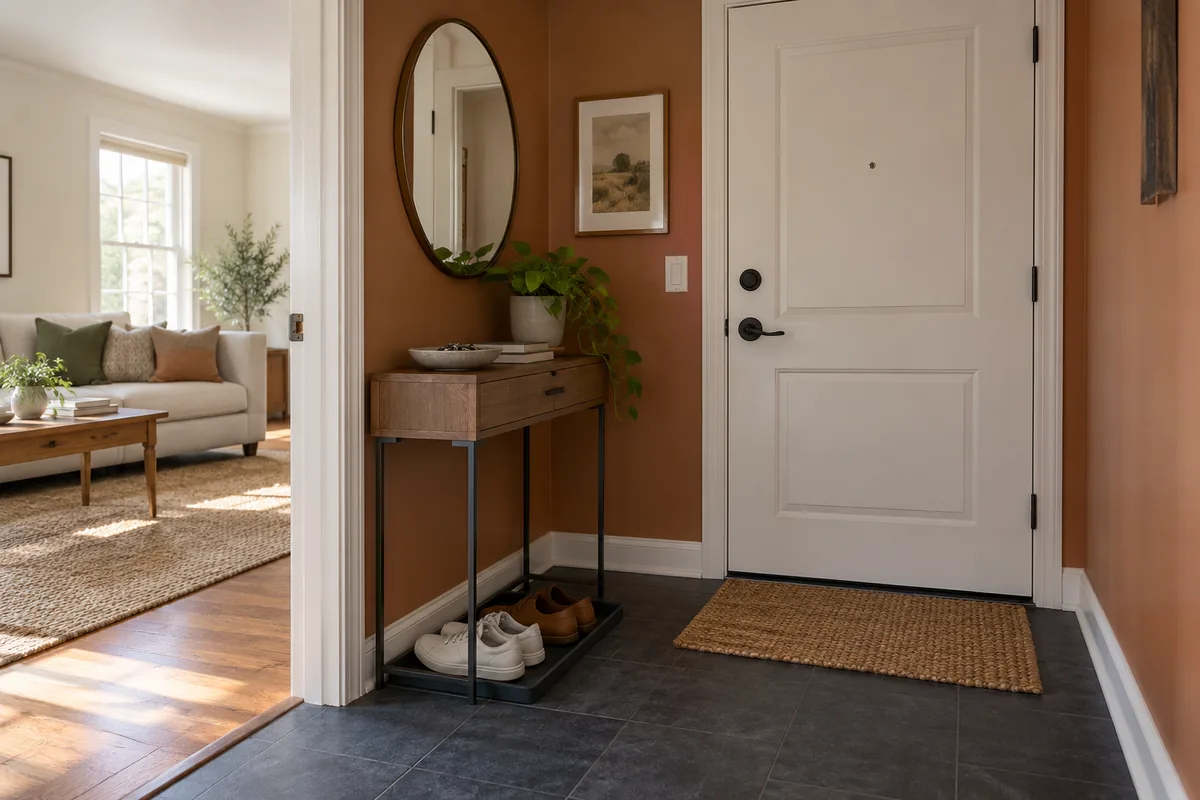
A small entryway does not need to hold everything you own. It needs to handle what arrives and leaves each day. Start with shoes, keys, and one everyday bag, then give the overflow a different home.
Watch your arrival routine
For a few days, notice where you drop things. If keys land on the nearest counter, a tray in that spot may work better than a new table beside the door. If shoes pile up because the rack is awkward to reach, rearrange the routine before adding capacity.
List the items that must stay by the door and those that can move elsewhere. Daily footwear deserves accessible space; out-of-season boots may not. A landing zone is a working area, not a second closet.
Measure the door swing first
Open the door fully and mark the swept area on a rough sketch. Include any interior door, closet door, radiator, or vent nearby. Measure the narrowest point of the normal walking route, not just the widest open floor area.
Local requirements and the needs of household members vary. Keep exits, required clearances, and accessible routes unobstructed. Do not treat a decorative layout example as a building-code measurement. If a new piece makes you turn sideways to enter, consider a smaller solution.
Choose one floor-level storage item
A shallow shoe tray or a low rack can contain daily shoes without adding a large cabinet. Select it by the number of pairs you actually need nearby and the space left when shoes are on it. A rack’s frame dimensions are not necessarily its full footprint in use.
Keep heavy items low and follow the manufacturer’s requirements. Furniture with drawers, doors, or shelves may need an anti-tip attachment. Check the CPSC’s Anchor It guidance and obtain approval for a suitable installation in a rental; do not substitute adhesive hooks for a required furniture anchor.
Give small essentials a defined home
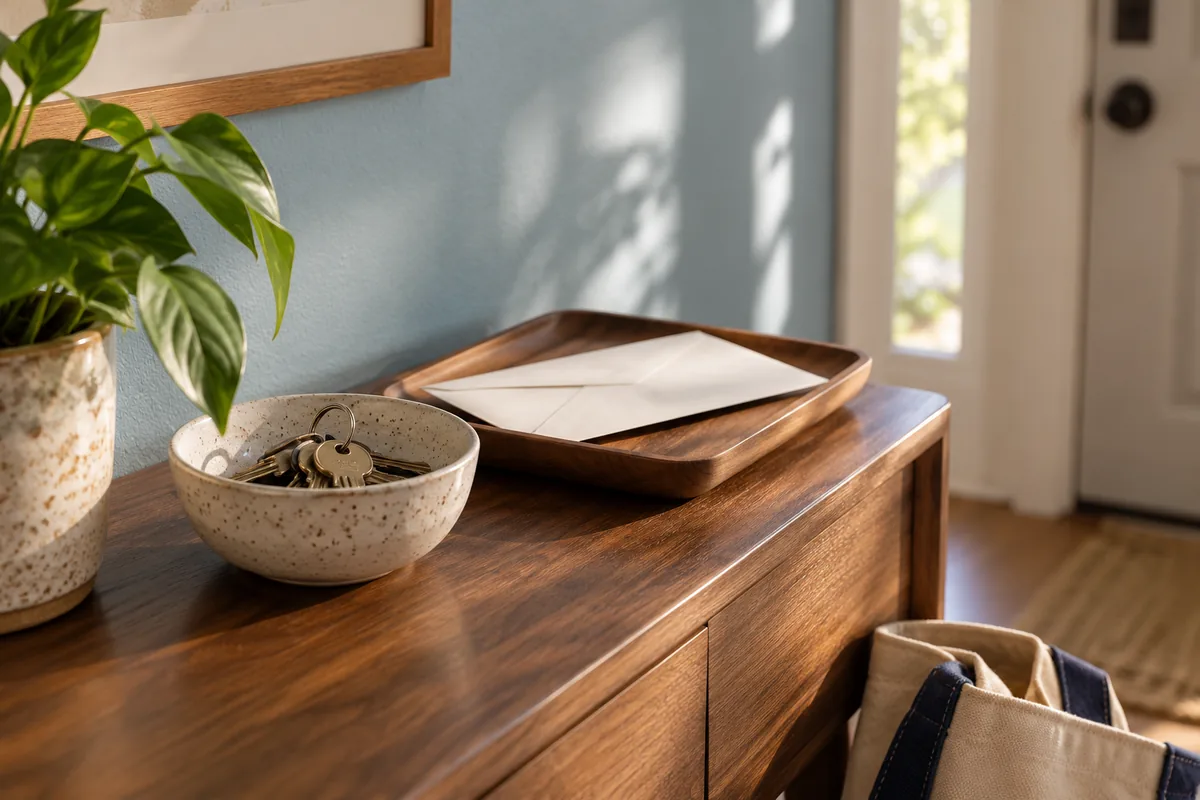
Use a tray or bowl for keys on an existing safe surface. Add one place for outgoing mail or items that must leave tomorrow. Keep those categories separate so that a necessary envelope does not disappear beneath everyday clutter.
For a bag, a rated removable hook might work only if the wall surface, item weight, and lease permit it. See our removable-hook planning guide before choosing one. A hook that holds a coat is not automatically suitable for a heavily loaded backpack.
Plan for wet shoes and overflow
Choose a tray that is easy to lift and clean, and protect the floor in a way compatible with its finish. Let wet items dry appropriately rather than hiding them in a closed decorative box. Follow care instructions for mats and flooring. If you are adding a mat or runner, check its footprint and combined rug-and-pad thickness against the door swing before buying.
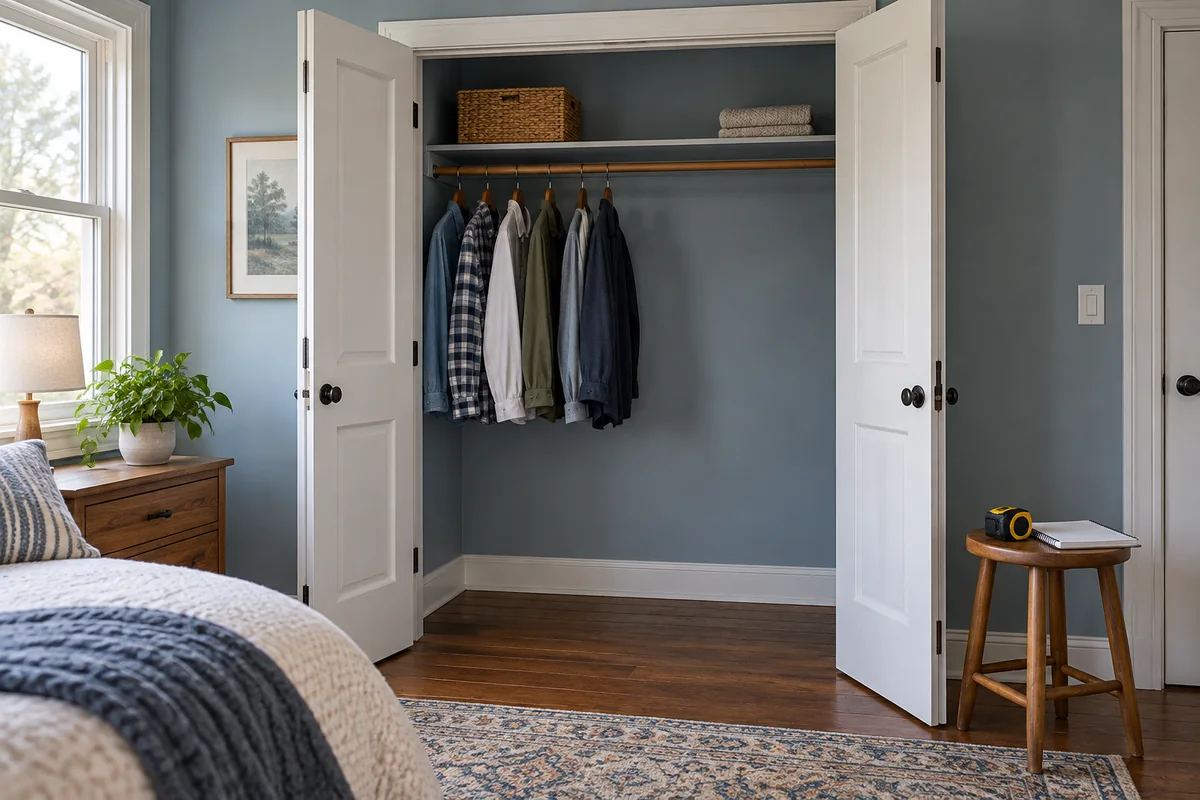
If a nearby closet will hold the overflow, measure its shelves and door opening before buying organizers. Check that the containers can be removed easily with the closet in normal use.
Give the household a practical limit, such as the daily pairs that fit on the chosen tray. Treat the limit as an organizing agreement, not a universal rule. If the zone is consistently too small, move occasional-use items before expanding into the exit route.
Check the system after a week
You should be able to open the door, walk in comfortably, and put your daily things away with little effort. If the tray is empty but the floor is crowded, the location is wrong. Adjust it rather than buying a second organizer immediately.
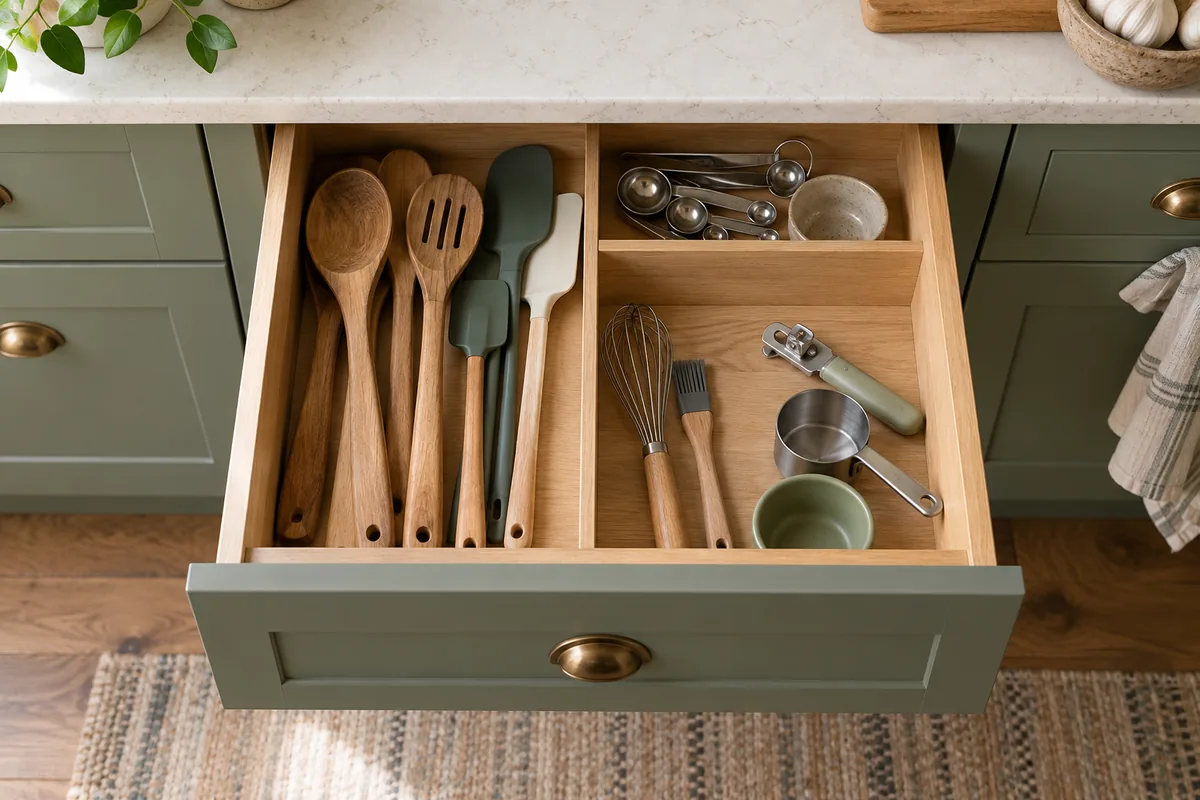
The same task-based method works for kitchen drawers. For a room beyond the entry, try the layout and textile changes in our reversible living room guide.
Sources and further reading
- CPSC: Get On Top of It Before They Do! — furniture anchoring guide (PDF)
Anchor furniture using suitable anti-tip hardware and the maker's directions.
The notes above identify which guidance each source supports. Layouts and planning examples are editorial suggestions, not tested product claims.