A living room refresh can begin with how the room works rather than what it lacks. Move one piece, simplify one surface, and notice the difference. A reversible update is most useful when it improves a real everyday problem.
Name one problem to solve
Write a specific sentence: the chair is difficult to reach, there is nowhere to set a cup, or the room feels visually crowded. A specific problem makes buying decisions easier. A general wish for a completely different room often leads to unrelated purchases.
Take a few photographs from normal standing and seated positions. Use them as a record of your own room, not as a comparison with a staged interior. List the furnishings you want to keep and the restrictions you need to respect.
Test a new layout first
Measure the usable floor area and sketch furniture footprints. Include doors, vents, and the routes you use most. Keep access clear and follow any safety or manufacturer requirements for heating equipment and electrical items; a decorative plan cannot define those clearances.
Move lighter pieces one at a time with appropriate help and floor protection. Do not drag heavy furniture or move it alone when it cannot be handled safely. Use a paper layout if moving the real item would be difficult.
Work with a simple textile palette
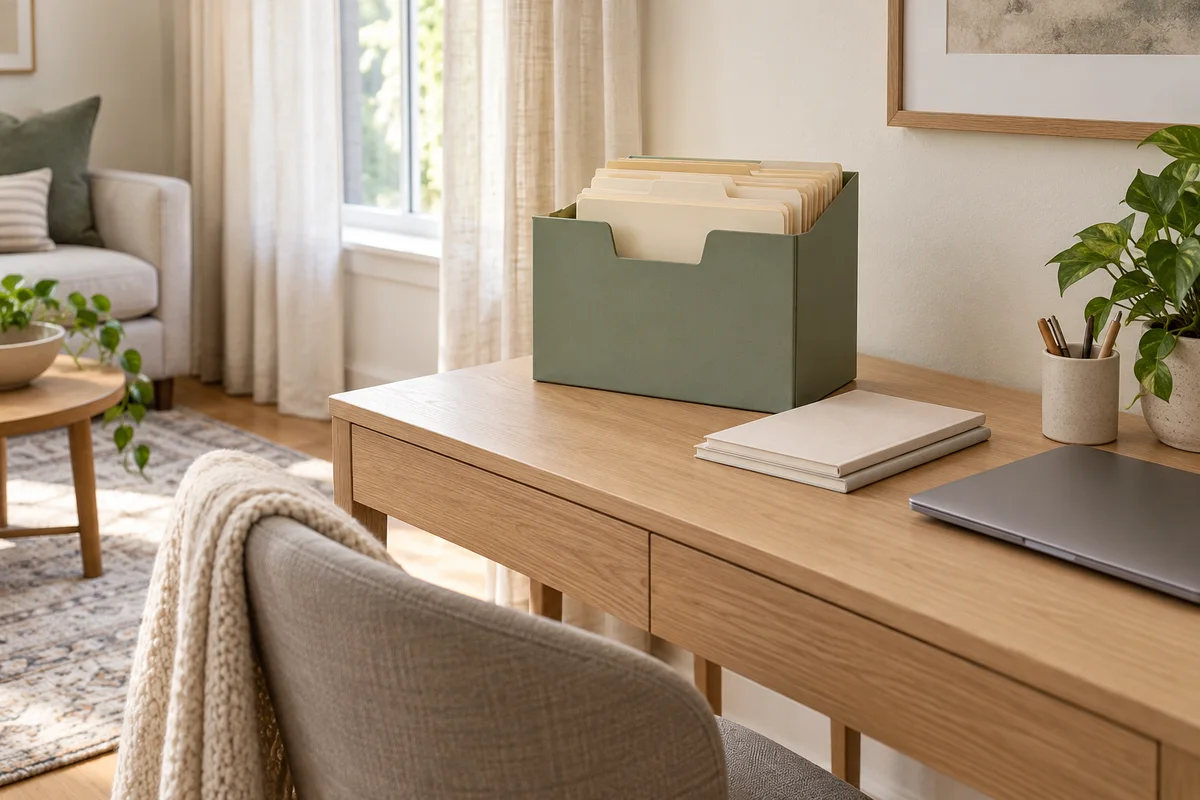
Choose an existing item you like as the starting color. Then compare a few fabric samples or items already in the home. A rug, throw, or cushion cover can change the visual balance without repainting, but comfort and maintenance matter as much as color.
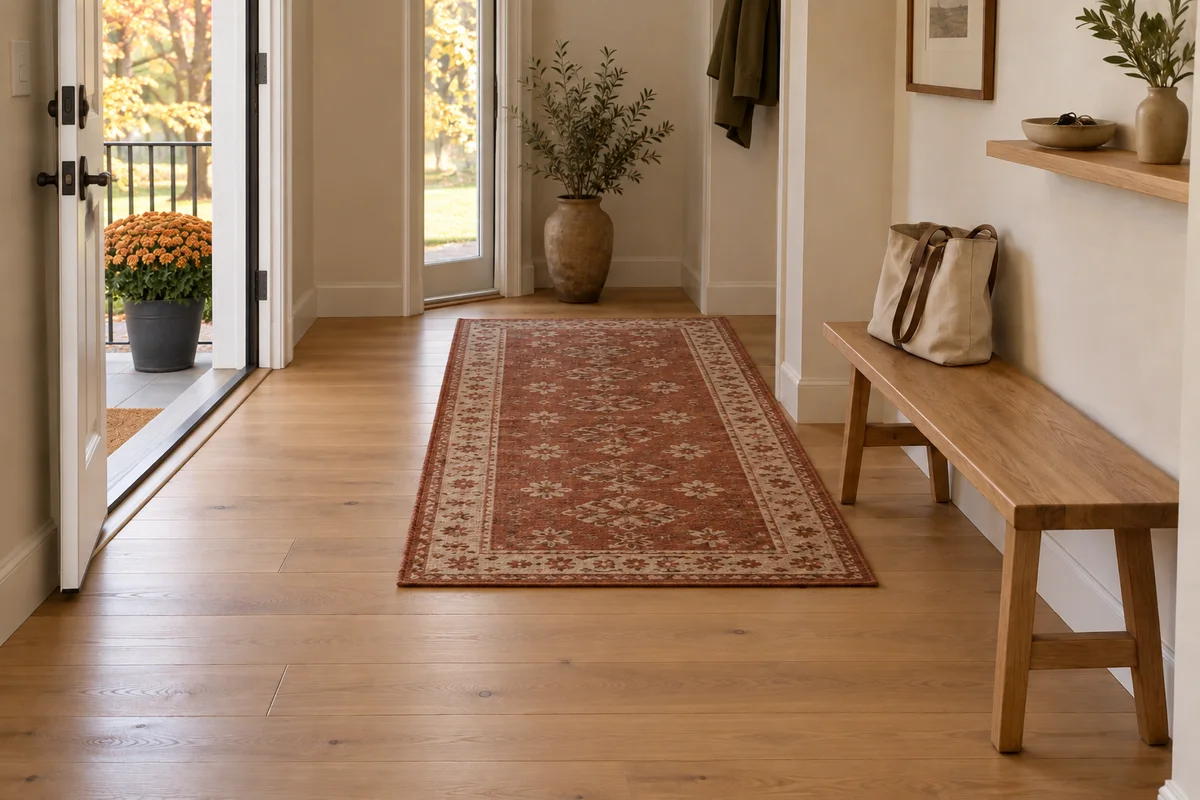
Measure the space in use before selecting a rug. Check the door movement and choose a suitable nonslip method compatible with the flooring and the rug maker’s instructions. Avoid curled edges in walking routes.
Give useful surfaces room to work
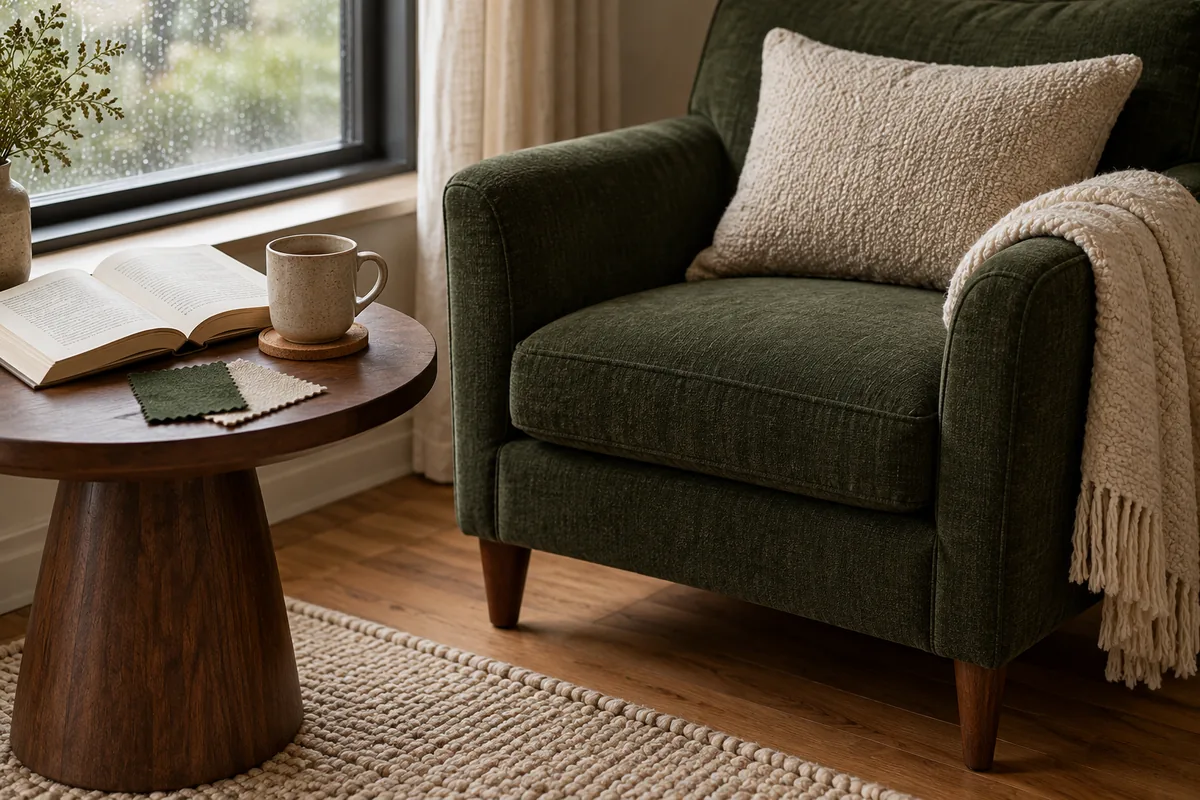
A side table is useful only if you can reach it comfortably and still move around it. Clear an existing table before adding another. Group the items used together, such as a reading book and coaster, and relocate the rest.
If a storage unit is needed, account for its doors or drawers when open. Follow anti-tip instructions and review CPSC guidance for furniture with doors, drawers, or shelves. Obtain approval for a suitable anchor in a rental. Do not leave required anchoring out of the plan to make a change appear reversible.
Add wall changes carefully
Art may be leaned only where the item and location allow safe, stable placement. A heavy frame balanced on a narrow surface is not a reliable substitute for mounting. For adhesive products, use our removable-hook checklist and the exact manufacturer’s instructions.
Treat peel-and-stick finishes as a separate decision, not an automatic rental-safe option. Compatibility and removal vary by finish and product. Check permission and official instructions, and do not assume a small sample guarantees no damage across an entire wall.
Make a staged shopping list
Separate your list into changes you can make with existing items, a small purchase that addresses the main problem, and optional decoration. Try the existing-item changes first. After living with them, remove purchases that no longer solve a problem.
Record measurements, care requirements, and return conditions for anything you still need. Before ordering a bulky piece, measure the whole furniture delivery route, including doors, hallway turns, stairs, and elevators. Avoid buying a complete coordinated set before you know how one piece works in the room.
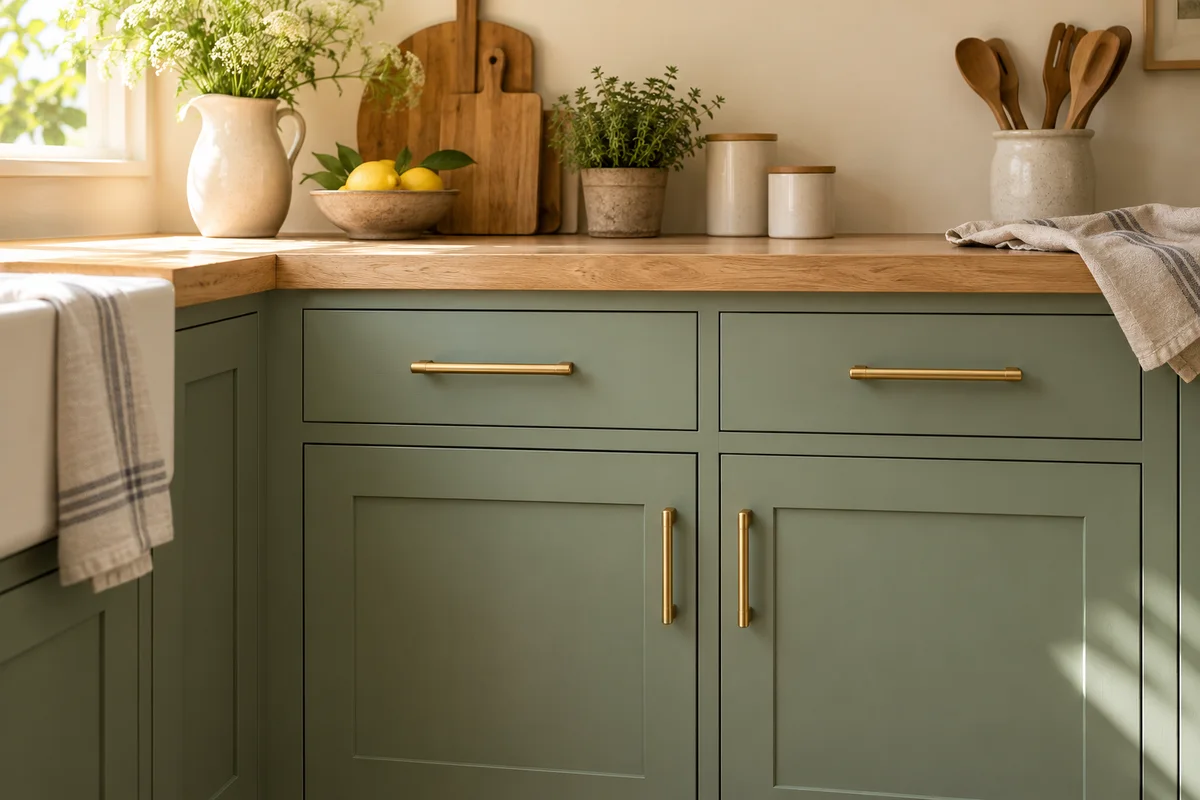
For an adjoining space, create a small entryway landing zone. If clutter is concentrated in the kitchen, begin with one drawer instead of treating it as a whole-home makeover.
Sources and further reading
- CPSC: Get On Top of It Before They Do! — furniture anchoring guide (PDF)
Follow the particular anti-tip device and furniture manufacturer instructions.
The notes above identify which guidance each source supports. Layouts and planning examples are editorial suggestions, not tested product claims.