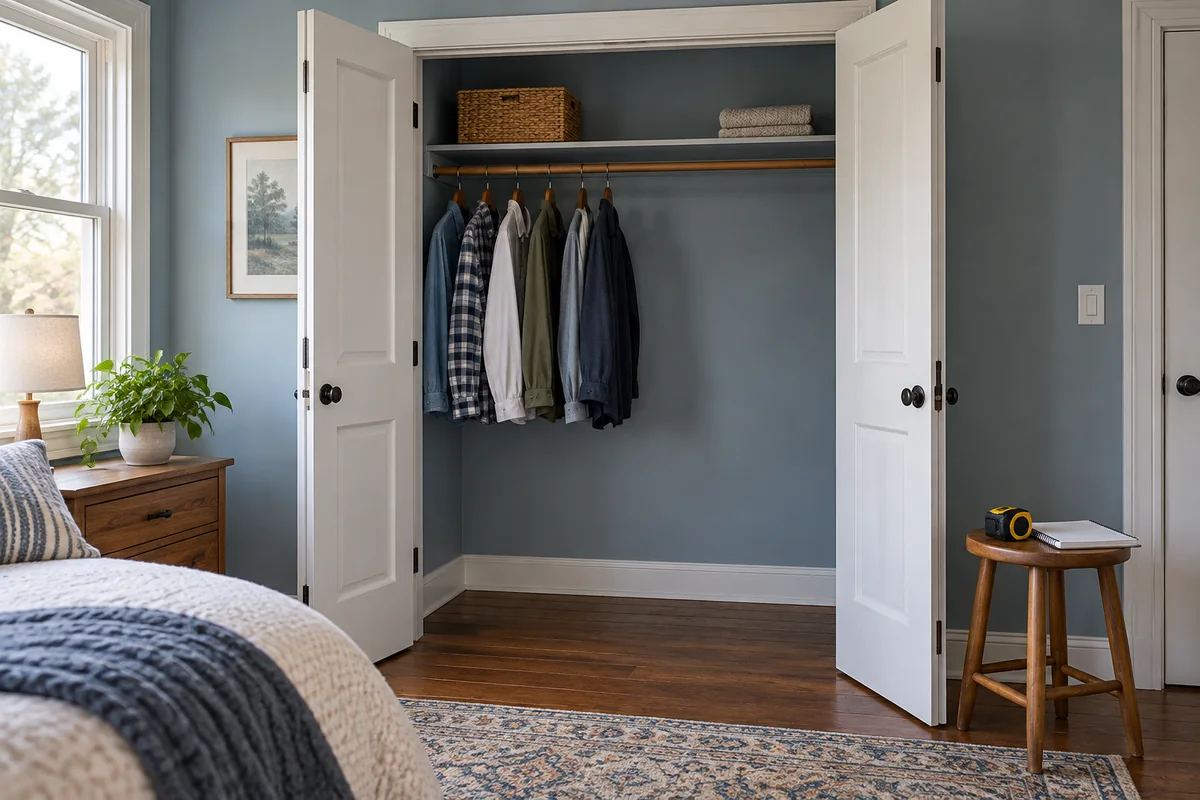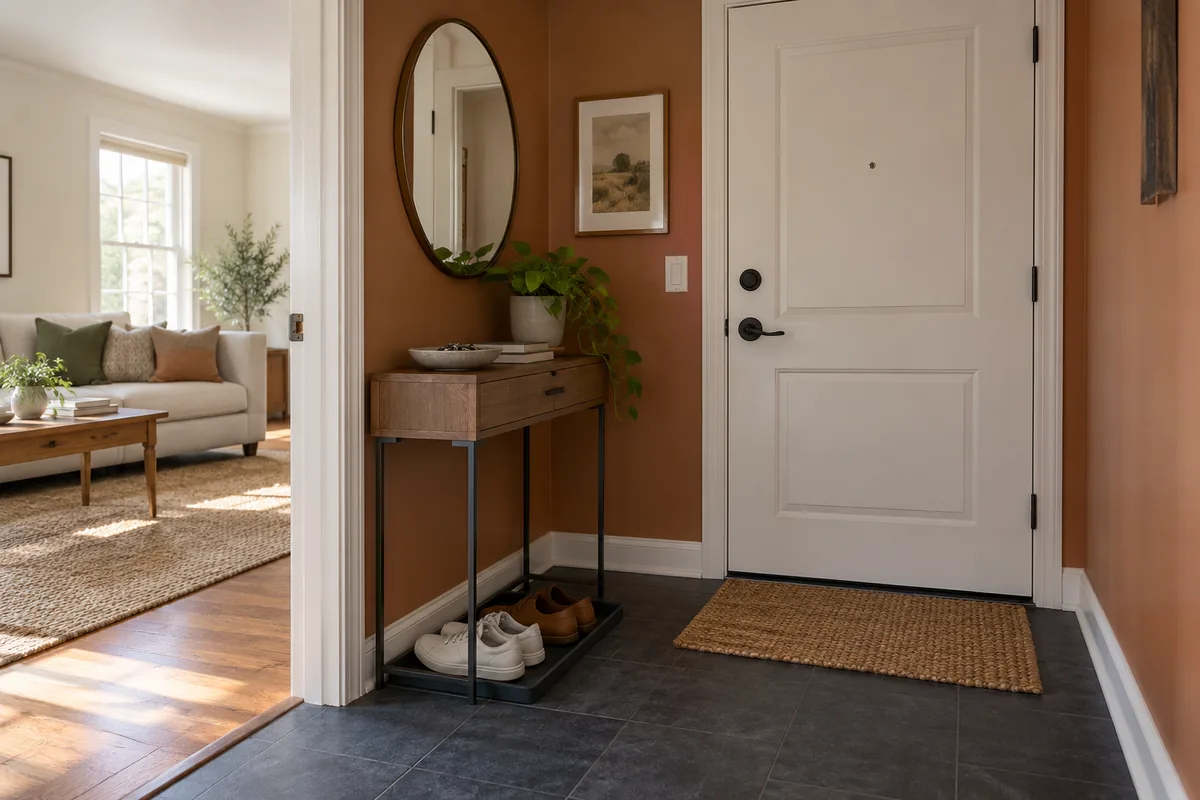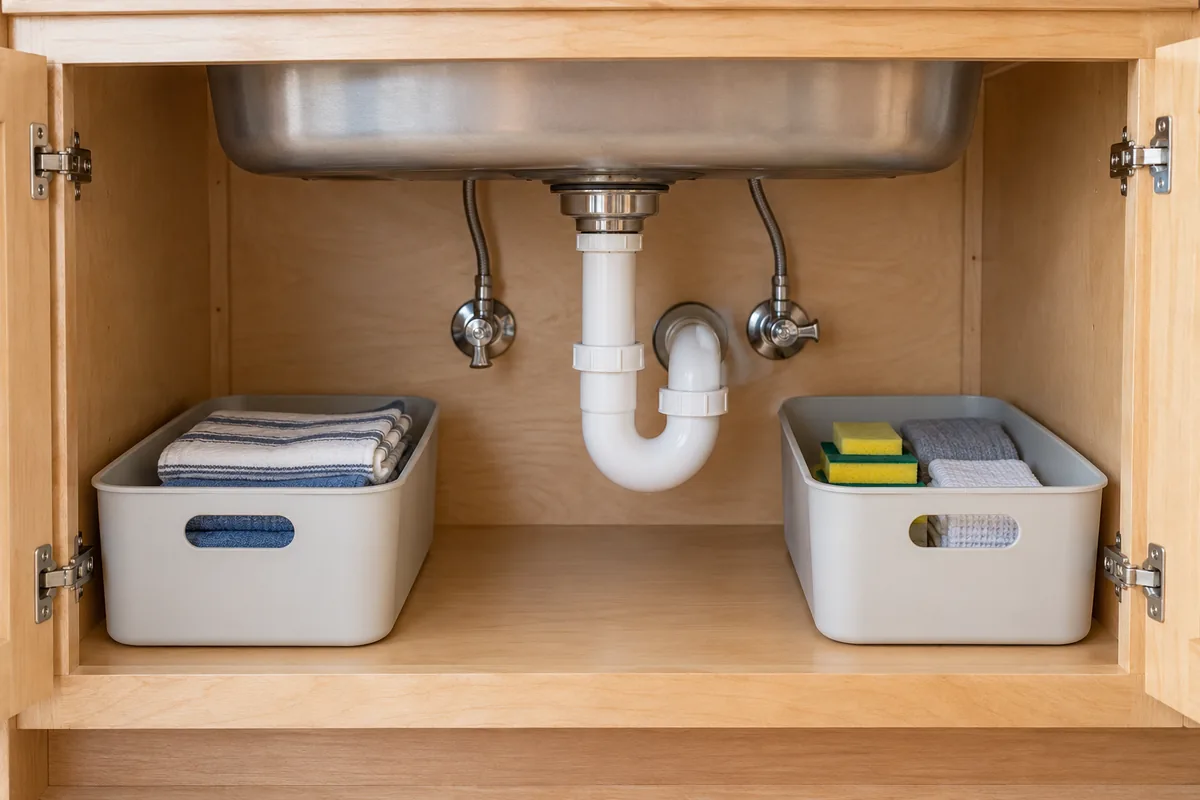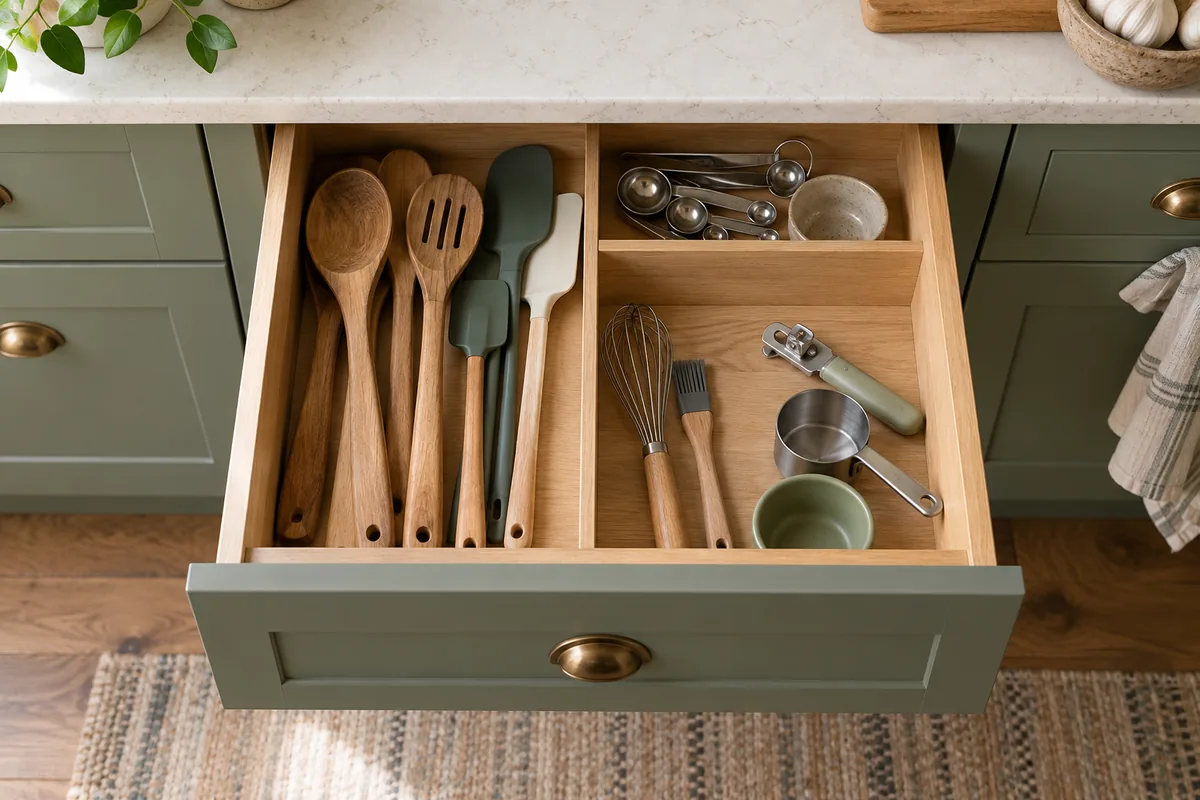
A crowded drawer is often a sorting problem before it is a shopping problem. Start with the utensils you reach for most often and build the layout around those. The goal is to make cooking easier, not to fill every inch with matching bins.
Start with one drawer and one task
Choose the drawer nearest your main preparation area. Empty it onto a clear surface and put a towel underneath sharp or delicate items. Sort everything into daily tools, occasional tools, duplicates, and items that belong somewhere else. Do not empty the whole kitchen at once; you need a usable place to cook while you work.
Ask which task each item supports. A vegetable peeler belongs with the tools you use to prepare vegetables. A pastry cutter you use twice a year can live farther away. Keep the tools you actually use, rather than building a drawer around an idealized cooking routine.
Measure the usable space
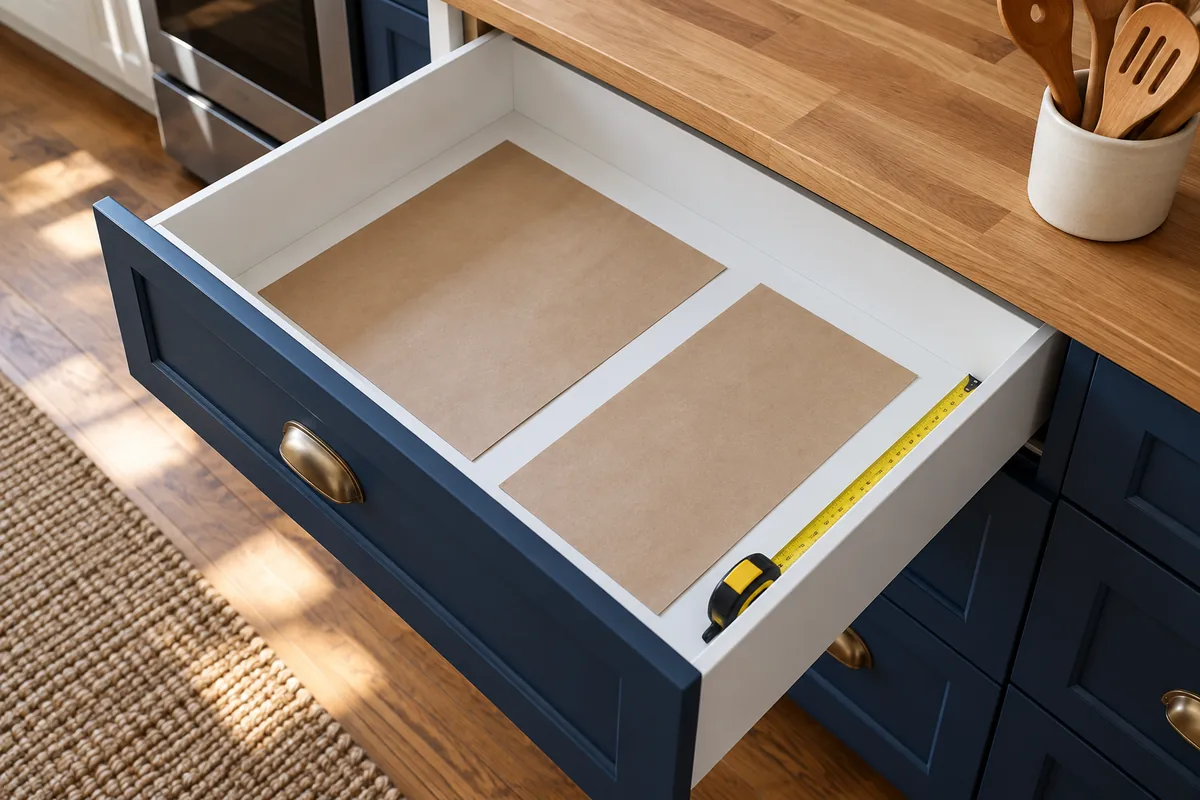
Measure the inside width, front-to-back depth, and height below the moving drawer or cabinet above it. Check for screw heads and rails that reduce clearance. Record the measurements in inches and photograph the empty drawer beside a tape measure.
Cut scrap paper to the footprint of a proposed organizer. Lay the templates inside the drawer before buying anything. A tray advertised by its outside dimensions may have much smaller compartments inside. Check both. Also leave enough room to lift items out without catching their handles under an overhanging counter.
Build three practical zones
Use a long compartment for spatulas and wooden spoons, a small zone for measuring tools, and a flexible zone for the miscellaneous items you genuinely use. This is an example, not a required arrangement. If you bake more than you cook, your zones should look different.
Try clean containers you already own if their edges are smooth and they fit securely. Reused containers should be dry, cleanable, and free of sharp edges. Avoid loose knife blades in a general utensil drawer; use a protective storage system intended for those knives.
Test the layout before upgrading
For a week, put tools back after normal cooking and notice what gets moved. If a tool repeatedly ends up outside its compartment, the compartment may be too small or poorly placed. Change that zone before assuming you need a larger organizer.
Leave some unassigned space for awkward items. A fully packed drawer can be harder to maintain because there is no room to adjust. If tools slide around, look for a liner suitable for your drawer finish and follow its care directions. Avoid adhesives unless you know they are appropriate for the surface.
Make the reset easy
Choose a short reset after your regular kitchen cleanup: return misplaced tools, remove crumbs, and check that the drawer closes freely. Store occasional-use equipment elsewhere only if you can still reach it safely. Do not create a high, heavy stack to solve a low drawer problem.
A useful success check is simple: can you find the tool you need without lifting three other things? If yes, the drawer is doing its job. Matching bins are optional.
What to try next
If the problem extends beyond drawers, use the same measure-first approach in our under-sink storage guide. For a broader room reset, start with reversible home updates. If you add storage furniture, follow the safety guidance in the CPSC’s Anchor It resources; a rental agreement does not remove a tip-over risk.
If worn or awkward handles are part of the problem, measure cabinet pull hole spacing and mounting thickness before choosing replacements. Try one compatible sample before ordering a complete set.
Sources and further reading
- CPSC: Get On Top of It Before They Do! — furniture anchoring guide (PDF)
Furniture anchoring if a separate storage unit is added; not evidence for the proposed drawer layout.
The notes above identify which guidance each source supports. Layouts and planning examples are editorial suggestions, not tested product claims.