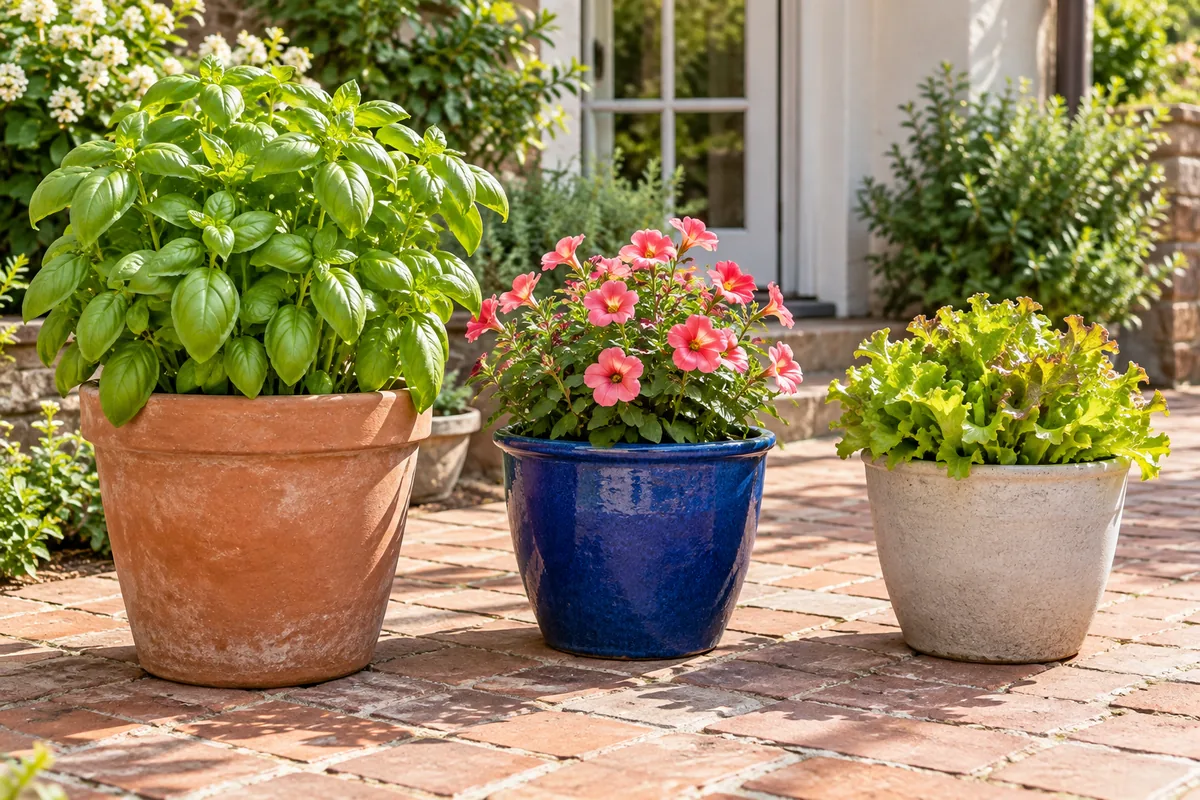
Three pots can be a manageable starting experiment, but the number is an editorial suggestion rather than a gardening rule. The useful starting point is a space you can observe, water, and maintain. Choose the plants after you understand that space.
Observe the growing conditions
Record when direct sun reaches your intended location over a typical day. Trees, neighboring buildings, and the season change that pattern. Use the information alongside plant labels and advice from your local extension office; a generic list of patio plants cannot account for every U.S. climate.
Note wind, reflected heat, and access to water. A corner that looks attractive in a photo may be awkward to reach with a watering can. On a balcony, obtain building approval for loads and drainage before placing containers.
Give each pot a job
An example plan is one plant you will use, one you enjoy looking at, and one small experiment. That could mean a suitable herb, an ornamental plant, and a second edible crop selected for your local conditions. It is a way to prioritize, not a promise that any three plants will grow together.
Begin with separate containers if their watering needs differ. Check mature size and the container size recommended for each plant. Do not select a pot only by how the young nursery plant looks inside it.
Choose drainage and potting mix
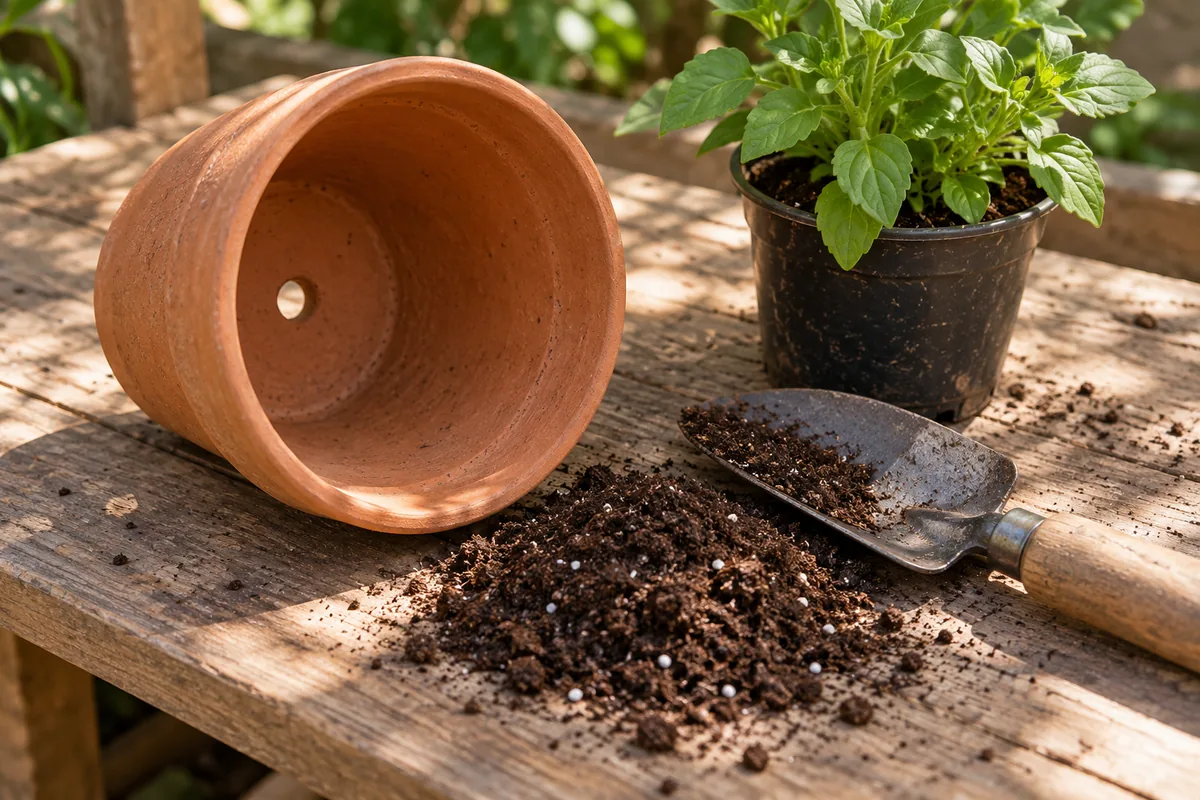
University of Maryland Extension advises using containers with adequate drainage and a growing medium suitable for containers. Ordinary garden soil is not a direct substitute for container potting mix. Also, a layer of gravel at the bottom does not improve drainage and takes away growing space.
For a conventional drained pot, verify the drainage openings and make sure they will remain clear in the planned location. A self-watering planter is a different designed system; follow its reservoir and overflow instructions rather than modifying it based on generic advice.
Make watering part of the layout
Place the pots where you can check them without stretching over railings or climbing on furniture. Follow the plant and growing-medium instructions and inspect conditions rather than adopting a fixed watering calendar for every pot.
Plan where excess water can drain without damaging surfaces or disturbing neighbors. Empty ordinary saucers as appropriate and follow any self-watering system’s instructions. If the containers must be moved for watering, consider the weight of the whole setup when wet, not only the empty pot.
Keep the first season simple
Keep a short note for each plant: name, location, planting date, and observations. Photograph it occasionally to compare growth and detect changes. Record actual conditions instead of assuming a problem is caused by too much or too little water.
Use fertilizers or pest treatments only according to their labels and the needs of the plant. Check edible-crop suitability before applying any treatment. Local extension services can help identify problems; this guide does not diagnose disease or prescribe pesticide use.
Review what worked
At the end of the growing season, ask which pot was easiest to care for and which location suited your routine. Expand only where the space and maintenance burden still make sense. You do not need a dense wall of greenery to have a worthwhile container garden.
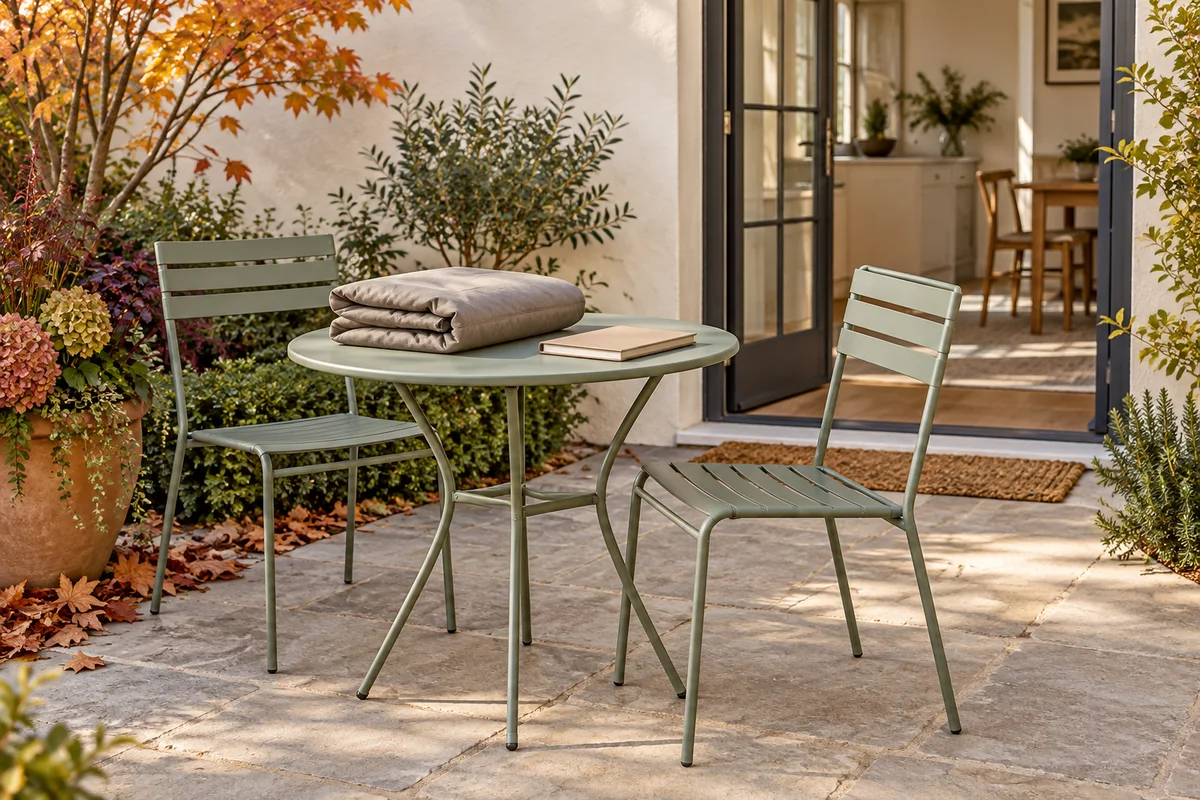
See small patio layout planning before adding furniture around the plants. You can also place illustrative potted plants alongside furniture in the Patio & Balcony Layout Planner. Its fixed example plants help explore positions; they do not predict growth, mature size, or plant suitability. For screening ideas, compare removable patio privacy options and keep the load, wind, and maintenance limitations in mind.
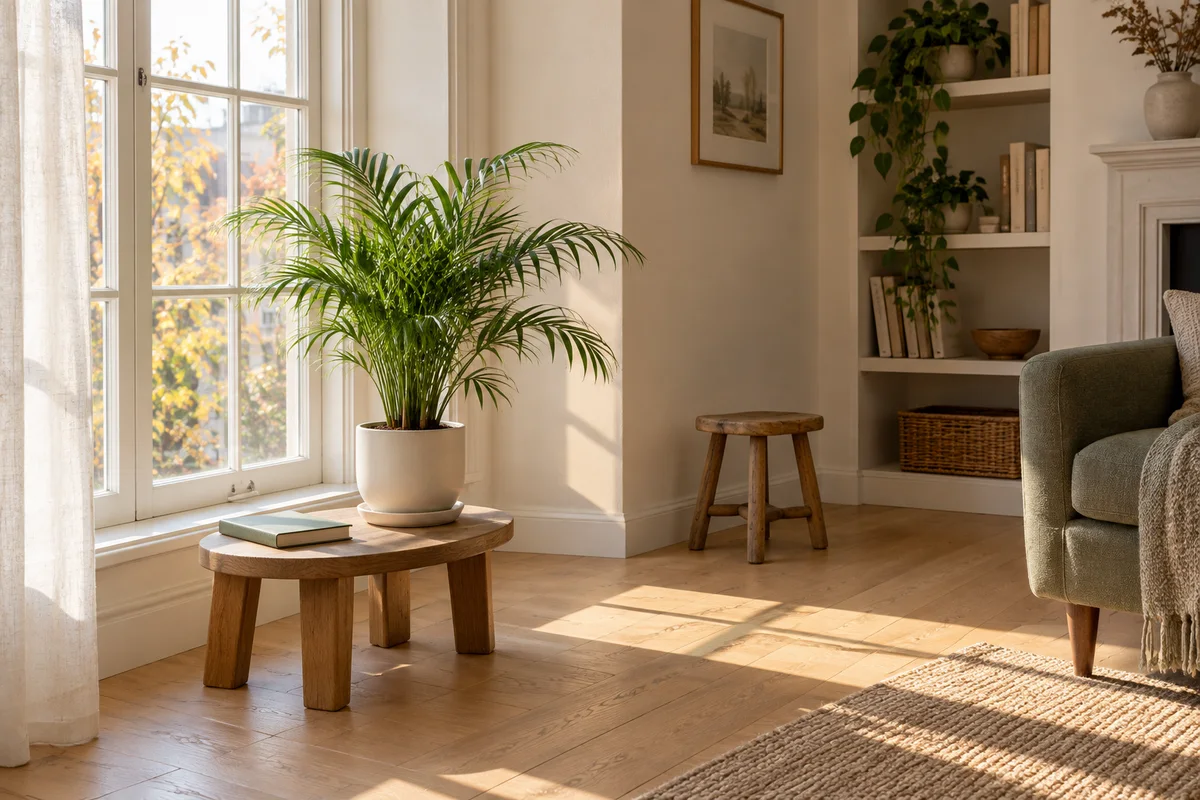
Planning greenery indoors instead? Check light at the exact window-side spot before buying a houseplant. Indoor exposure needs its own observations rather than being inferred from the outdoor garden.
Sources and further reading
- University of Maryland Extension: Growing vegetables in containers and salad tables
Container drainage, growing media, container weight, and matching plants to conditions.
The notes above identify which guidance each source supports. Layouts and planning examples are editorial suggestions, not tested product claims.